
An etymology app for the words you actually read
Tap a word on a page you're reading, whether a paperback, a screenshot or an article. SnapVerbo gives its definition, and Word Roots shows where it comes from: its roots, what they meant, and the words it's related to.






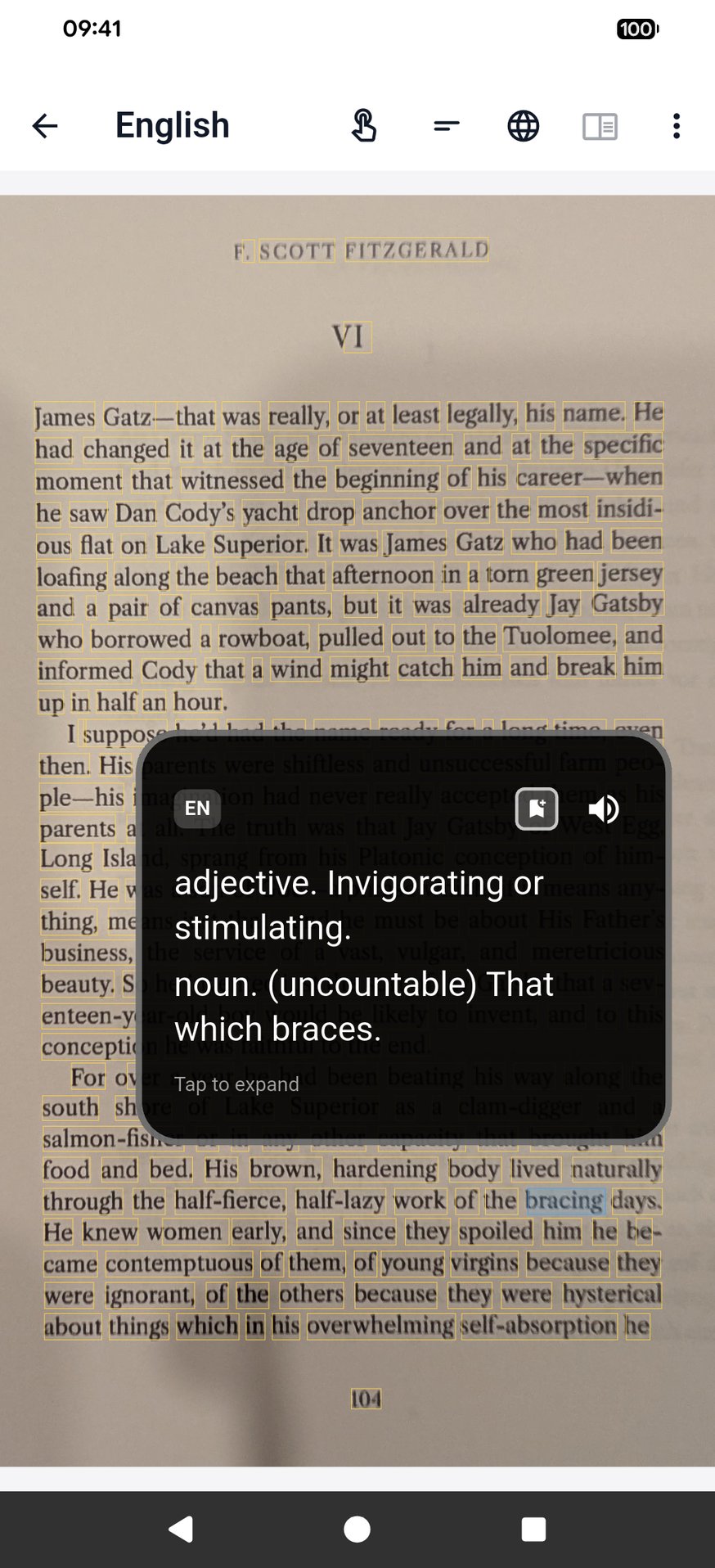
Tap a word as you read
An example from The Great Gatsby
"His brown, hardening body lived naturally through the half-fierce, half-lazy work of the bracing days." Word Roots for bracing:
- Root: brace, "hold or support firmly", from Old French brace, from Latin bracchia.
- Literal sense: "arms or supports holding something firmly".
- How it got here: Latin bracchia meant "arms"; the sense grew from holding with the arms to supporting or fastening something in place.
- Related: embrace (hold someone in the arms), bracelet (worn around the wrist).
One breakdown explains several words at once, which is what makes roots easier to remember than definitions.
From your own reading, not a word list
- Each word is saved with the sentence you met it in and the photo of the page.
- The breakdown is saved with the word and comes back on the back of its flashcard.
- It goes along when you export to Anki or print a PDF of flashcards.
Questions
- What does Word Roots show?
- The word's roots and what each one meant, the literal sense they add up to, a short note on how the word came to mean what it does today, and a few related words that share a root.
- Which words can I look up?
- Any English word you save, from a photo of a book page, a screenshot, a web article or text you type. Phrases, numbers and names have no breakdown.
- Is it free?
- Yes, free forever, with no account needed. Short ads help cover the cost of AI.
- Does it work for other languages?
- Yes. For a word in a language you are learning, the same link shows Word Parts: the pieces of the word as a learner sees them today, with a hook to remember it.